

Building a Performance Driven Workforce
Through Better Support Systems
PB Eatz exists because performance is rarely just a people problem.


Energy becomes inconsistent. Recovery gets pushed aside. Staff morale declines gradually. People continue to work under pressure while adapting around support systems that technically work but fail to fully support human performance.
Across military environments, operational systems, institutional food service settings, and high-pressure teams, a common pattern emerged: systems often function exactly as intended while the people relying on them quietly absorb the cost.
PB Eatz was created to explore a simple question:
How do we improve employee performance and operational performance without asking people to continuously operate at the edge of exhaustion?


The goal was never to criticize those systems.
The goal was to understand why high-performing people were working so hard to compensate for support systems that were supposed to help them.
Over time, that question became less about food and more about the relationship between people, performance, and the systems designed to support them.
Where it Started
The foundation of PB Eatz was built through observation. Our founder's military experience exposed a recurring reality:
That observation became the foundation of PB Eatz.
- Logistics moved.
- Requirements were met.
- Operations continued.
Yet many of the people inside those systems were constantly adapting around friction that rarely appeared in reports or performance metrics.
- Meals went partially unused.
- Recovery became an afterthought.
- People continued performing while carrying increasing levels of fatigue, stress, and pressure.


- What is functional nutrition?
- Why do some foods help with fatigue while others leave people feeling depleted?
- How can nutrition better support energy, recovery, and operational performance?
Nutrition mattered…but nutrition alone was never the complete answer.
Workforce performance is influenced by leadership, morale, recovery, trust, environment, and the systems people interact with every day.
Food was not the destination. It was the starting point for understanding a much bigger picture.
The more those connections emerged, the harder it became to separate nutrition from morale, recovery, leadership, and long-term performance. That broader perspective ultimately became the foundation for the PB Eatz ecosystem.
From Functional Nutrition
To Human Performance


One Ecosystem. Three Expressions.
PB Eatz explores performance through the belief that nutrition, morale, recovery, leadership,
and support structures are not separate conversations—they are interconnected parts of the same system.
That work currently takes shape through three connected areas:


Performance
Ready Energy (PRE)
Exploring a performance sustainment initiative designed around readiness, usability, morale, and human performance in demanding environments.
Traditional operational meals are often designed to meet logistical requirements first. But meals that go partially consumed do not fully support readiness, recovery, or long-term performance.
PREs were created as a distinct performance sustainment initiative exploring a more usable and human-centered approach to operational support through nutrition. Built for real-world performance environments, these plant based meals support consistent energy, morale, recovery, and operational performance without sacrificing practicality in the field.

The
Morale Effect
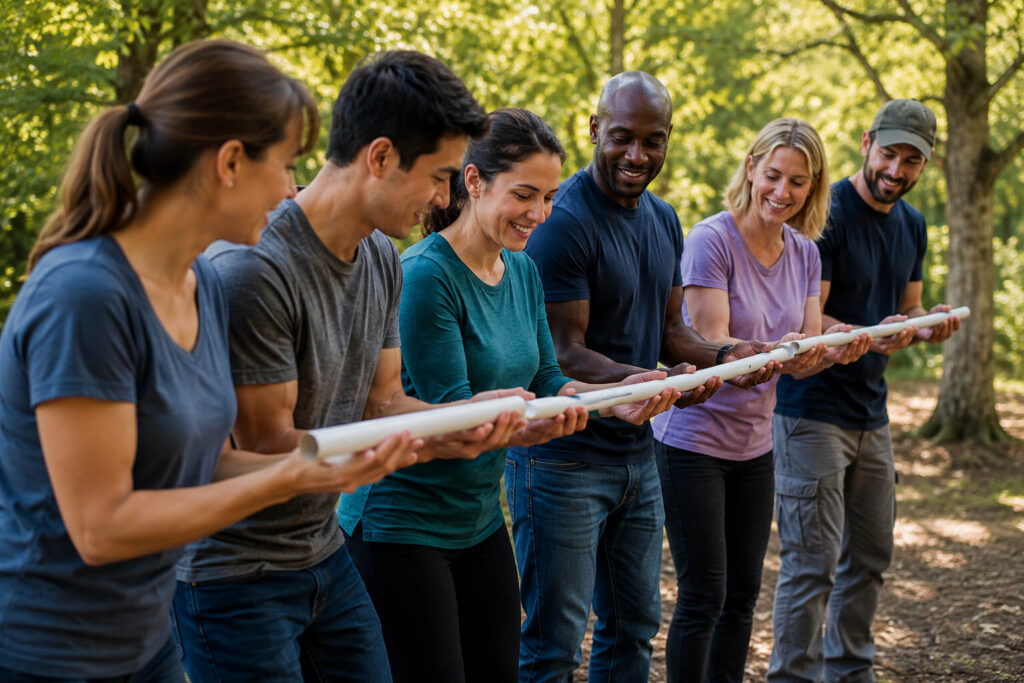
Exploring how trust, communication, leadership, and staff morale influence long-term performance under pressure.
Teams can continue functioning while trust declines, exhaustion builds, and recovery disappears beneath the surface. Over time, that strain affects consistency, decision-making, resilience, and long-term operational performance.
The Morale Effect explores how team morale shapes the way people lead, recover, communicate, perform, and sustain pressure over time. Rather than existing separately from nutrition, recovery, or leadership, morale influences all of them—making it one of the most important factors in long-term human performance.


Energy, Recovery
& Performance
Exploring recovery experiences, sustainable energy practices, and resilience strategies that help people return with greater clarity and capacity.
Modern performance culture often celebrates endurance while ignoring the long-term cost of constant pressure. People learn how to keep functioning long after clarity, energy, and recovery have started to decline.
Our energy, recovery, and performance experiences were created as an intentional step away from constant performance mode — spaces designed to help people regain clarity, perspective, and recovery that carries back into everyday life. This is not passive escape from a performance driven workforce or performative wellness.
Different expressions. One belief. People perform differently when they feel supported.
What began as questions about functional nutrition has expanded into broader conversations about workforce performance, sustainable food systems, leadership, morale, recovery, and human-centered support structures.
Today, PB Eatz continues to explore how support systems influence the way people perform, recover, lead, and sustain pressure over time.
The questions continue to evolve, but the focus remains the same: understanding what helps people perform well without sacrificing long-term well-being.
Future initiatives include:
- books and educational resources
- speaking engagements
- leadership development
- strategic partnerships
- recovery experiences
- innovation within operational nutrition and sustainable food systems
To better understand how support systems influence human performance and to contribute to solutions that help people perform consistently without sacrificing long-term well-being.
Looking Ahead


The Question We
Continue to Explore
Whether the conversation begins with food, leadership, morale, recovery, or operational readiness, the same question remains:
What becomes possible when support systems are designed around the people using them?
Because improving operational performance starts with understanding the human experience behind it.